As Silver’s Chief Creative Officer, and a street photographer in my own right, I was thrilled to be invited to join the judging panel for the Event Photography Awards 2026, culminating in last night’s ceremony at Central Hall Westminster.
Photography has always played an important part in my life and in the way I see the world. I am primarily a street photographer, drawn to the unplanned moments that reveal something honest about people and the lives they lead.
Throughout my career, I have also had the privilege of commissioning and art-directing some exceptional photographers, including esteemed NME rock portraitist Steve Double, advertising photographer Andy Green and the inimitable late Bob Carlos Clarke; often described as the British Helmut Newton. Working with people of that calibre taught me that great photography is not simply about operating a camera. It is about seeing what others miss.
Judging the Event Photography Awards reminded me how much street photography and event photography have in common. Both require anticipation, observation and instinct. They capture the quiet moments that might otherwise pass unnoticed, alongside the ecstatic moments that define an occasion. At their best, they preserve the stories that become our shared history.
The breadth of this year’s winning work was extraordinary. The images transported us from the crowds and energy of events like Glastonbury to the otherworldly landscape of Burning Man; from the speed, and precision of Formula 1 to the intimacy and formality of a royal portrait.
Yet it was not simply the scale or spectacle of these events that made the photographs memorable. It was the humanity within them.
A fleeting expression. The reaction of someone in the crowd. A relationship caught in a fraction of a second. These are the details that transform a record of an event into a story about what it felt like to be there.
That feels particularly important now.
We are living through a period in which artificial intelligence can create increasingly convincing images of people, places and experiences that never existed. Understandably, this has created anxiety among photographers and other creative professionals.
But there is a slightly counterintuitive possibility here: perhaps AI will make authentic photography more valuable, not less.
When perfect-looking images become almost limitless, reality acquires a scarcity premium. The photograph becomes more than an image; it becomes evidence that somebody was there, paying attention.
AI can generate the appearance of an experience, but it cannot live it. It cannot stand in a crowd and sense that something is about to happen. It cannot feel the atmosphere change, recognise the significance of a glance or instinctively turn towards the moment nobody else has noticed.
It can imitate an outcome, but it cannot bear witness.
That is why I believe the role of photographers in documenting our lives and recording our history is becoming more important. In a world containing more synthetic imagery, photographs of real people experiencing real moments will carry greater meaning.
Of course, this does not mean photographers should fear or reject AI. Every new technology is initially accused of destroying the thing it eventually helps to expand. Photography itself was once considered a threat to painting. Digital cameras were supposedly going to diminish the craft of photography. Smartphones were going to make professional photographers redundant.
None of those things happened quite as predicted.
AI is another tool. In the hands of talented people, it can support research, improve workflows, accelerate editing and open up new creative possibilities. But the tool is not the storyteller. A better camera does not automatically produce a better photograph, any more than owning a Stradivarius makes someone a concert violinist.
The judgement, sensitivity, curiosity and humanity still come from the person using it.
That human judgement was also at the heart of the awards. It was a particular pleasure, and, in its own way, quite reassuring, to discover how many of my selections aligned with those of my fellow judges.
We came from different backgrounds and brought our own experiences and tastes to the process, yet we repeatedly responded to the same qualities: emotional truth, a distinctive point of view and the ability to communicate an entire story in a single frame.
Great photography has never depended solely on technical perfection. It depends on seeing: recognising the moment, understanding its meaning and knowing when to press the shutter.
The Event Photography Awards celebrate the people who possess that rare instinct. They also celebrate photography’s enduring ability to make us stop, look and feel.
Technology will continue to evolve, as it should. But experiences must still be lived. Emotions must still be felt. History must still be witnessed.
The more artificial images we create, the more we may come to value those rooted in something real.
And there will always be a need for talented photographers to show us what it was really like to be there.
You can explore the winning and shortlisted work on the Event Photography Awards website.
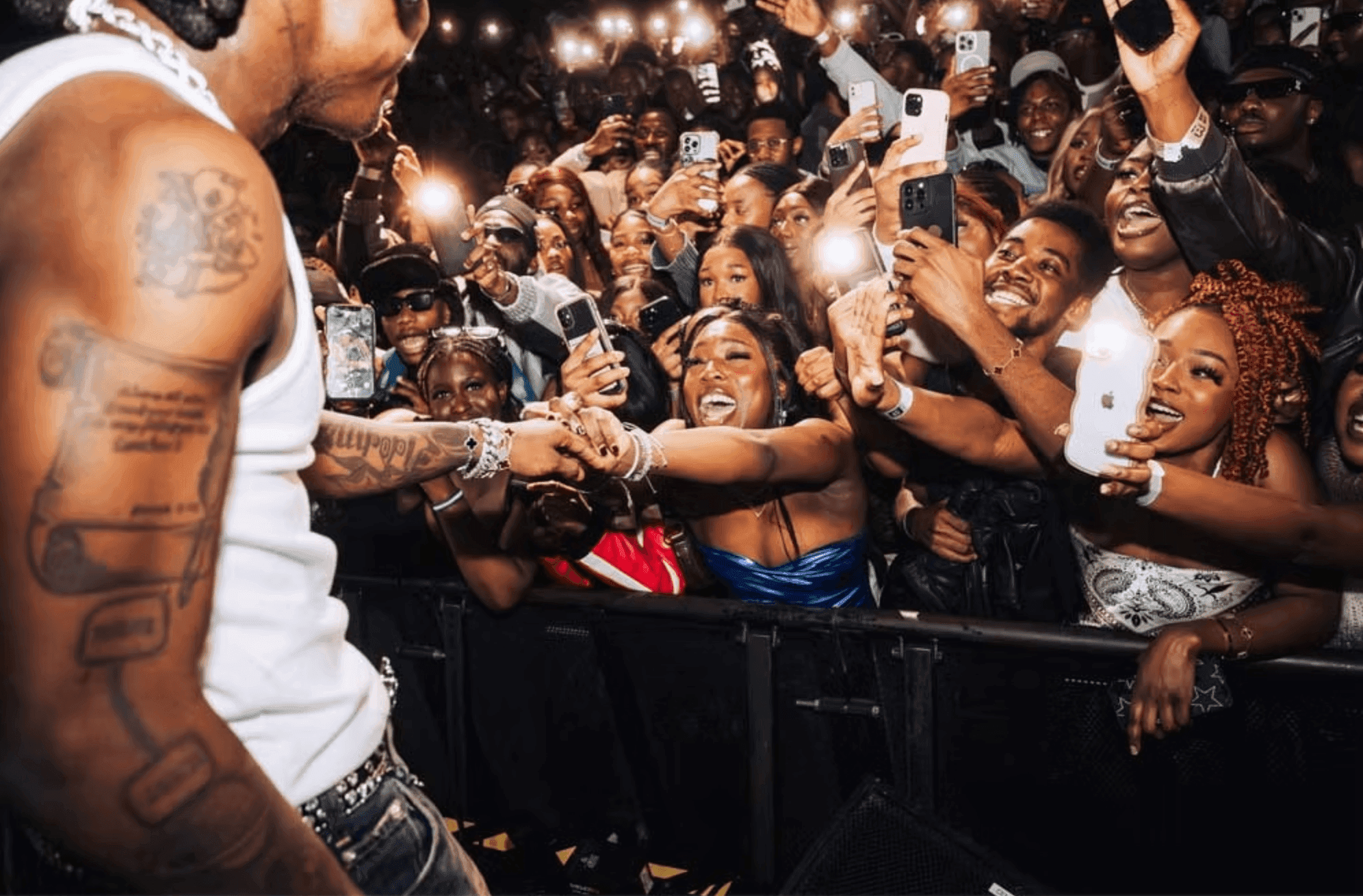
Featured photograph: Lewis Buncher – Shallipopi